Is the Trump Coin Legal Tender?
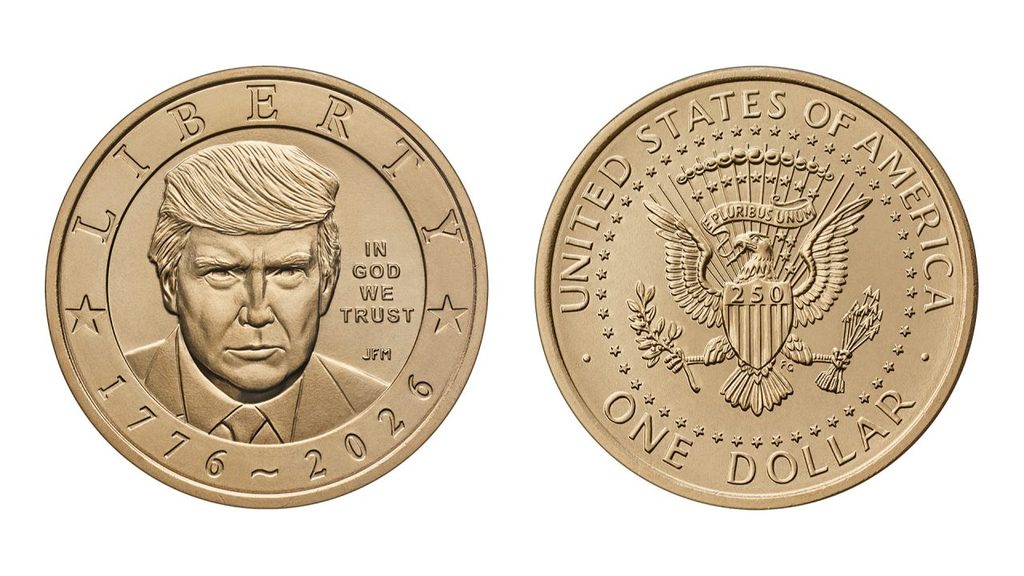
Yes. The U.S. Mint explicitly states the Trump $1 coin is legal tender, meaning it can be used for everyday transactions just like any other U.S. dollar coin.
However, because the Mint sells them at a premium, they are primarily intended as collectibles, not circulation currency.
Was It Legal to Mint a Coin Featuring a Living President?
Why experts say it may be illegal
Several laws and traditions prohibit living people from appearing on U.S. currency:
- 1866 federal law — bans portraits of living persons on U.S. money (originally passed after a Treasury official put his own face on a note).
- Scholars argue this applies broadly to currency and should make the Trump coin illegal.
- The Thayer Amendment — explicitly forbids images of living people on paper currency, but not coins.
- Critics say the spirit of the law still applies.
- Circulating Collectible Coin Redesign Act of 2020 (CCCRA) — authorizes special 250th‑anniversary coins but prohibits portraits of living persons on the reverse side.
- The Trump coin includes Trump’s portrait, raising questions about statutory compliance.
Legal scholars interviewed by NPR/VPM say the coin “is likely illegal” and could be challenged in court.
Why the Treasury says it is legal
The Trump administration argues:
- The 2020 CCCRA gives the Mint broad authority to design commemorative coins for the nation’s 250th anniversary.
- The prohibition applies only to the reverse of the coin, and they interpret the law narrowly.
- Historical precedent exists: Calvin Coolidge, while alive and serving as president, appeared on a 1926 commemorative coin.
PolitiFact notes that while the tradition is strong, there is no universal, unbreakable legal ban on living people appearing on coins — only on certain coin series.
Court challenges
A federal lawsuit in Oregon attempted to block the coin, arguing it violated the 1866 law and the CCCRA. The case was later voluntarily dismissed, leaving the legal question unresolved.
Bottom Line
- Is it legal tender? Yes — the U.S. Mint officially designates it as legal tender.
- Was it legal to mint? Unclear. The Trump administration cites a 2020 commemorative‑coin law to justify it, but multiple legal experts say the coin violates long‑standing federal prohibitions on featuring living persons. No court has issued a definitive ruling.
If you want, I can also write a more narrative or magazine‑style version of this article.
magazine‑style version
The Dollar That Roared: Inside the Controversy of the Trump $1 Coin
When the U.S. Mint unveiled the Trump $1 coin this September, it didn’t just release a new piece of currency — it dropped a political lightning bolt into America’s pocket. Gleaming, gold‑toned, and unmistakably stamped with the face of a living president, the coin instantly became a cultural Rorschach test. To some, it’s a patriotic collectible. To others, it’s a breach of tradition bordering on a constitutional eyebrow‑raiser. And to everyone watching, it’s a reminder that even our money isn’t immune from the nation’s political currents.
This is the story of how a single dollar became the most talked‑about coin in decades.
A Coin That Was Never Supposed to Exist
For more than 150 years, U.S. currency has followed a quiet but ironclad rule: no living people on the money. The tradition dates back to 1866, when Congress banned living portraits after a Treasury official slipped his own face onto a banknote. Since then, the rule has been treated as gospel — a guardrail against vanity, propaganda, and political cults of personality.
So when the Mint announced a $1 coin featuring Donald J. Trump, eyebrows didn’t just rise; they practically launched into orbit.
The coin itself is handsome enough: a warm golden color, a bold profile of Trump, and the familiar inscriptions of American currency. It contains no gold, but it does contain symbolism — and controversy — in abundance.
Legal Tender… With an Asterisk
The Mint is clear on one point: the Trump $1 coin is legal tender. You can spend it at the grocery store, tip your barista with it, or slide it into a vending machine if you’re feeling adventurous. But because the Mint sells them at a premium — $61 for a roll of 25, $154.50 for a bag of 100 — they’re designed more for collectors than cash registers.
Still, the legal‑tender designation matters. It means this isn’t just a commemorative trinket. It’s real money, backed by the full faith and credit of the United States.
And that’s where the legal questions begin.
Was It Legal to Mint?
Here’s where the story gets thorny.
The case against legality
Legal scholars point to several longstanding restrictions:
- The 1866 law banning living people on U.S. currency.
- The Thayer Amendment, which prohibits living portraits on paper money.
- The 2020 Circulating Collectible Coin Redesign Act, which forbids living persons on certain commemorative coin designs.
The Trump coin, critics argue, violates both the spirit and possibly the letter of these laws. A lawsuit in Oregon even attempted to block its release, claiming the Mint had overstepped its authority. That case was later dropped, leaving the question unresolved.
The case for legality
The Trump administration counters with its own reading of the law:
- The 2020 redesign act gives the Mint broad latitude for America’s 250th‑anniversary coin program.
- The prohibition applies only to the reverse of certain coins — and they interpret the Trump portrait as exempt.
- There’s historical precedent: Calvin Coolidge appeared on a 1926 commemorative coin while still alive.
In other words, the Mint believes it threaded the needle.
Legal experts aren’t so sure.
A Coin as a Mirror
Whether you love it, hate it, or simply find it fascinating, the Trump $1 coin is more than metal. It’s a reflection of a country where politics saturate everything — even the change in your pocket.
It’s also a reminder that symbols matter. Currency is one of the most widely circulated expressions of national identity. Putting a living president on it breaks a tradition older than the Statue of Liberty, and that alone ensures the debate won’t fade anytime soon.
The Bottom Line
- Yes, the Trump $1 coin is legal tender.
- Maybe, it’s legal — depending on how you interpret a tangle of 19th‑ and 21st‑century laws.
- Definitely, it’s one of the most controversial coins ever minted in the United States.
As always, you should confirm political and legal details with trusted sources, especially as interpretations continue to evolve.