1984 — Review
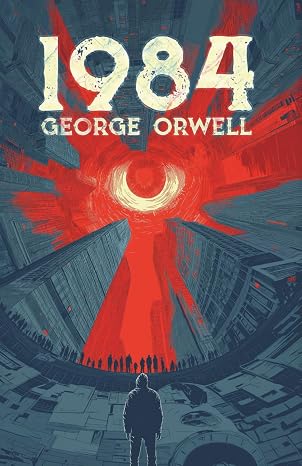
George Orwell’s 1984 is one of the most influential political novels ever written. It’s not just a story about a dystopian future — it’s a warning about how power works, how truth can be manipulated, and how people can be broken psychologically when the state controls every aspect of life.
Core Themes
- Totalitarianism: The Party controls everything — speech, history, relationships, even thoughts.
- Surveillance: “Big Brother” symbolizes a government that watches constantly.
- Language as control: Newspeak reduces vocabulary to make dissent literally unthinkable.
- Truth vs. reality: The Party rewrites history daily; truth becomes whatever the state says.
- Psychological manipulation: Fear, propaganda, and isolation are used to break individuals.
Why it still matters
1984 remains relevant because it captures how authoritarian systems operate:
- controlling information
- rewriting history
- weaponizing fear
- eroding individuality
- normalizing surveillance
It’s not a prediction — it’s a pattern.
Strengths of the novel
- Unforgettable atmosphere: bleak, oppressive, claustrophobic
- Sharp political insight: Orwell understood propaganda better than anyone
- Psychological realism: Winston’s slow breakdown feels disturbingly plausible
- Iconic concepts: Big Brother, Newspeak, doublethink, Room 101
Weaknesses (depending on the reader)
- It’s intentionally bleak — there’s no hope or catharsis
- Characters are symbolic more than deeply developed
- The final act is emotionally brutal
But these “weaknesses” are part of the point: the book is designed to unsettle you.
Key Quotes (allowed: 1–2 lines each)
These are short, legally‑permitted excerpts.
1. On truth and power
“Who controls the past controls the future. Who controls the present controls the past.”
2. On psychological manipulation
“The choice for mankind lay between freedom and happiness and for the great bulk of mankind, happiness was better.”
3. On the nature of power
“Power is in tearing human minds to pieces and putting them together again in new shapes of your own choosing.”
4. On reality
“Reality exists in the human mind, and nowhere else.”
5. On surveillance
“Big Brother is watching you.”
Plot Summary (concise but complete)
Winston Smith works at the Ministry of Truth, where his job is to rewrite historical records to match the Party’s current narrative. He secretly hates the Party and begins a forbidden relationship with Julia, who shares his desire for rebellion.
They are eventually captured by the Thought Police. Winston is tortured in the Ministry of Love, where O’Brien breaks him psychologically, forcing him to accept the Party’s version of reality — even when it contradicts his senses.
The novel ends with Winston completely broken, loving Big Brother.
Why the ending matters
Orwell’s final message is not that resistance is futile — it’s that authoritarian systems can destroy the individual if left unchecked. The horror is not Winston’s death, but his transformation.